
Delhi High Court’s interim restraint in Sun Pharma v Dr Reddy’s is a sharp reminder that in IP law, typography can matter as much as vocabulary.
In late December 2025, the Delhi High Court stepped into a dispute that sits right at the intersection of pharma branding and consumer-facing skincare: Sun Pharmaceutical Industries Ltd. alleges that Dr Reddy’s VENUSIA sunscreen labels placed the word “SUN” so prominently that it stopped being a mere description and began functioning like a badge of origin—i.e., a trademark. The Court, at the interim stage, agreed prima facie and directed Dr Reddy’s to maintain status quo and not undertake further manufacturing under the impugned labels until the next hearing.
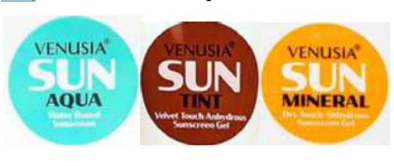
This isn’t just another “two big companies fighting” story. For anyone building brands in the OTC / dermacosmetic / cosmeceutical space, it reads like a practical lesson in how courts evaluate “descriptive use” defences: not in theory, but as the consumer sees the label on the shelf.
What the Court did (and what it did not do)
This was an interim order—the Court is not delivering final findings on infringement or passing off. It made a prima facie assessment and granted temporary restraint to preserve the market situation until further hearing. That distinction matters because interim orders often become the real commercial battleground in fast-moving consumer health categories like sunscreens.
The central legal question: “descriptive use” vs “trademark use”
Words like sun, care, shield, aqua, derma, etc., are common in skincare. The Trade Marks Act, 1999 allows bona fide descriptive use (commonly invoked under Section 30(2)(a))—but that protection is not a free pass.
The Court’s interim reasoning (as reported) is essentially this:
You may be permitted to use a descriptive term—yet the moment your packaging makes that term look like a brand identifier, you risk stepping into infringement/passing off territory.
This is where label mechanics become legal evidence:
- font size and weight
- colour contrast
- placement and repetition
- whether the descriptive function is already served elsewhere (e.g., “sunscreen gel” clearly printed)
- whether the house brand is visually eclipsed
The Court’s reported view was that the usage appeared to function as a trademark and not as mere description, leading to interim restraint and status quo direction.
A doctrinal anchor: you can’t split the defence into “parts”
A particularly interesting legal hook (useful for law students and practitioners alike) is the Court’s reliance on the Zydus Wellness Products Ltd. v Cipla Health Ltd. line of reasoning: the benefit of Section 30(2)(a) is not available to only a part of the mark—it helps only where the impugned mark as a whole is used descriptively.
Why does this matter in practice? Because packaging disputes often involve a defendant saying:
“We used that word descriptively.”
But courts examine whether the word is being used in a way that dominates the consumer’s impression and works as a source identifier. If yes, the descriptive defence weakens—especially when the overall label presentation suggests branding.
Commercial Courts Act angle: why pre-institution mediation didn’t block the suit
For IP litigators (and students tracking procedure), the order also reflects the post-Patil Automation era reality: Section 12A pre-institution mediation is mandatory unless the suit contemplates urgent interim relief. The Supreme Court in Yamini Manohar v T.K.D. Keerthi clarifies that urgency is assessed from pleadings and reliefs sought; such suits shouldn’t be dismissed merely for not exhausting mediation if urgent interim relief is sought.
This matters because brand disputes often require immediate court protection—labels are printed, stocks are distributed, and consumer impressions form quickly.
Why this case is especially relevant to pharma + dermacosmetics
1) The “pharma halo effect” in consumer health branding
In India, the boundary between pharmaceutical goodwill and OTC skincare trust is porous. A strong pharma house mark can create consumer assumptions of quality and safety even in non-prescription skincare. So when a disputed element resembles a known house identifier, the risk is not just confusion—it’s borrowed credibility.
2) Sunscreen is a high-frequency product with low-involvement purchase behaviour
Most sunscreen purchases aren’t made like prescription drug choices. Consumers rely on quick visual cues: bold words, large fonts, familiar marks. That makes “initial impression” analysis extremely important in this category—exactly the kind of reasoning courts tend to emphasize in label disputes.
3) For in-house teams: marketing choices become litigation exhibits
In label disputes, your brand team’s creative decisions become courtroom facts. A judge may not need consumer surveys if the label itself creates a strong prima facie impression.
What brand owners and regulatory teams should take away
If you work in product development, branding, regulatory, or in-house legal, here’s the practical checklist this order indirectly teaches:
A) If you must use a descriptive word, design it like a description—not a mark
- keep it smaller than the house mark
- keep it in the same style family as other descriptive text
- avoid colour contrast that makes it the “hero” element
- don’t repeat it in a way that looks like a brand series
B) Don’t let the descriptive word overshadow the true brand
If the consumer’s eye lands first on the disputed word and only later on your actual brand, you have a problem—even if the word is “common”.
C) Document your intent early
Internal records showing that the word was chosen for descriptive need (and designed accordingly) can become valuable in court. “We’ll modify later” is rarely a comfortable posture if the label is already in commerce.
D) Watch for “family marks” and cross-category expansion
Companies often extend marks across categories (drug → OTC → skincare). Courts are sensitive to the possibility of association where the plaintiff plausibly operates in or near the defendant’s product space.
A law-student’s closing thought: trademark law is increasingly “visual”
We often study trademark law through statutory language—Sections 29 and 30, infringement and defences. But modern consumer markets are won (and litigated) in the visual grammar of packaging.
This interim order signals a simple proposition that every pharma-linked consumer brand should internalize:
If your label makes a descriptive word look like a trademark, courts may treat it like a trademark—even before trial.
The matter is sub judice and will evolve. But as an early snapshot of judicial instinct in packaging disputes, it is already instructive—for lawyers, brand teams, and the growing ecosystem of dermacosmetic innovation.
Reference
- LiveLaw (Ayushi Shukla, 29 Dec 2025) — “Delhi High Court Temporarily Bars Dr Reddy’s From Manufacturing Sunscreen Product With ‘SUN’ Mark On Sun Pharma Plea”
- Delhi High Court order PDF (uploaded file used for this write-up) — Sun Pharma v Dr Reddy’s (VENUSIA sunscreen “SUN” label dispute)
- Zydus Wellness Products Ltd. v. Cipla Health Ltd. & Anr. (Delhi High Court) — discussion on Section 30(2)(a) and “descriptive use” not applying to only a part of the mark
- Yamini Manohar v. T.K.D. Keerthi (Supreme Court) — order touching Section 12A Commercial Courts Act and “urgent interim relief”
- Patil Automation Pvt. Ltd. v. Rakheja Engineers Pvt. Ltd. (Supreme Court, 2022) — Section 12A (pre-institution mediation) held mandatory